
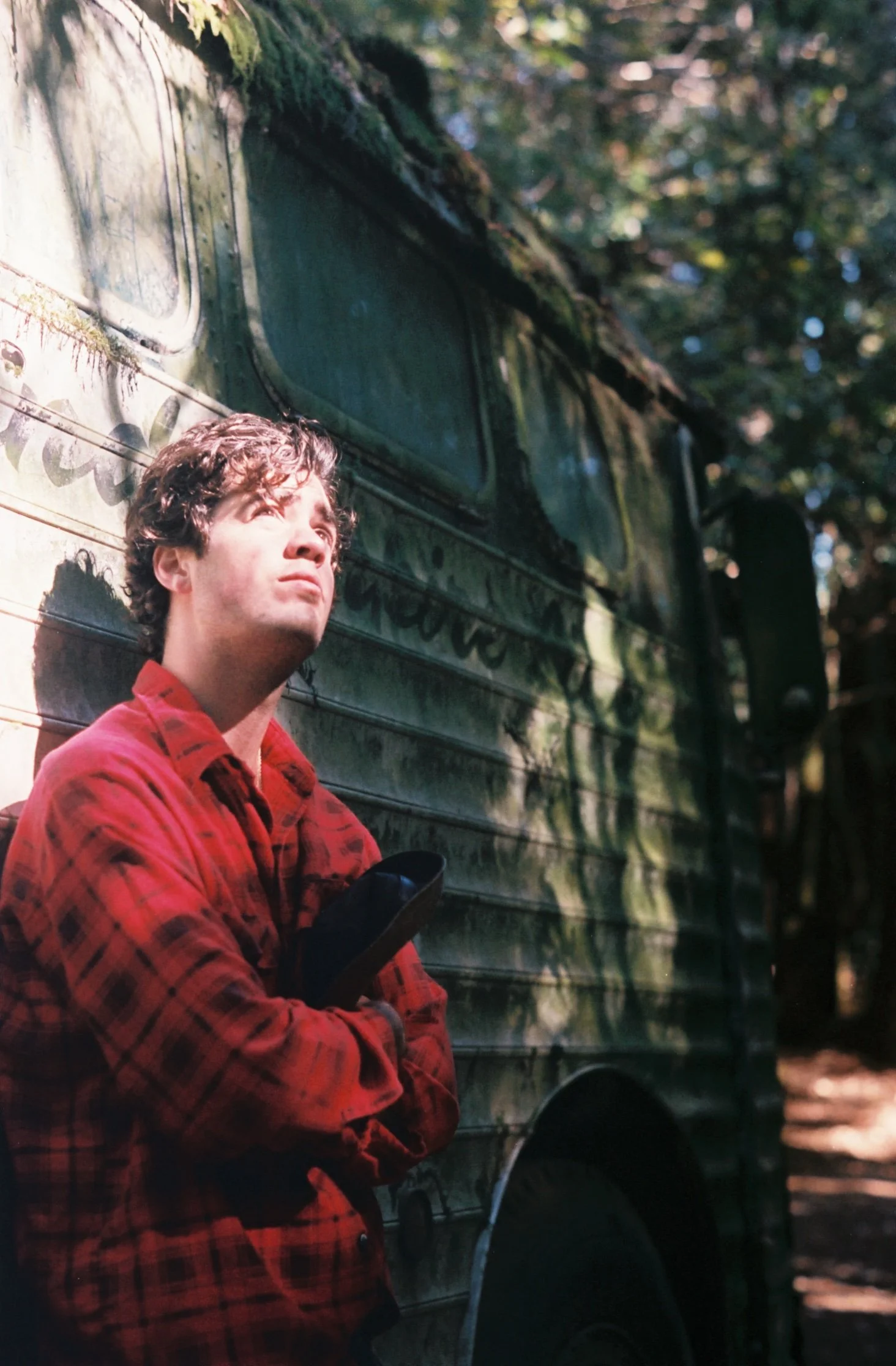
Ryan Canney is a filmmaker, designer, and storyteller based in Lansdale, PA whose work spans narrative film, documentary, and theatrical production.
He is the owner of Riverbank Creative a boutique video production company serving universities, healthcare organizations, and small businesses, where he focuses on crafting visually engaging, emotionally grounded stories that reflect the heart of the people behind them.
Ryan is the writer and director of Over the Hill (2024), a short narrative film exploring grief, memory, and the meaning we assign to our most treasured possessions. Shot at Geese Auto Salvage, a multigenerational family business in Perkasie, PA, Over the Hill became a centerpiece of the Precious Treasures Short Film Showcase, pairing the film with live community conversations on loss, legacy, and the stories objects carry.
His documentary work includes Mountains We Climb, which screened at five regional festivals and at several private events. The film chronicles cyclist Chris Baccash’s cancer recovery and journey toward the Leadville 100 MTB, spotlighting themes of resilience, community, and positive psychology.
In addition to his independent film work, Ryan currently serves as Production & Box Office Manager at Montgomery Theater, where he is also the Properties Designer for mainstage productions. His design experience expanded further in 2025 when he earned Production Designer credit on a limited series, cementing his multidisciplinary approach to visual storytelling.
A graduate of Temple University’s Film & Media Arts program and trained in the Sanford Meisner Acting Technique, Ryan’s love for filmmaking traces back to childhood afternoons with a family camcorder—and never really left. Whether behind the camera, shaping the world of a stage production, or collaborating with community partners, he remains driven by a single throughline: a belief that well-told stories deepen our understanding of ourselves and each other.
Ryan lives in Pennsylvania with his growing family, newly embracing fatherhood, which continues to influence his work with fresh perspective and renewed purpose.
Q&A
Where did your love of film stem from? When would you say it began?
As a kid, I have fond memories of making home movies on our family camcorder. Both silly ones of my sister and I putting on performances, as well as the classic “home videos". Some people hate watching that stuff because the camera work is sometimes erratic and out of focus, but when you look past those things, you can put yourself in the shoes of whoever was recording in that moment, and gain some additional insight. Why are they pointing it that direction? Why are they zooming in? How long do they stay there before hitting the big red button?
What made you want to pursue filmmaking?
In middle school I wanted to be an architect. At the time, we were having an addition put on our house, and I really enjoyed the long discussions at the dinner table designing the space, drawing the plan, imagining what it would look like and how we would use it. In High School I took a drafting class, and quickly realized given the amount of math involved, this path wasn’t for me. Before the next school year, my parents encouraged me to try the communications elective -- where we’d make videos, produce the weekly news, etc. That was 16 years ago, and I’ve lost track of how many videos I’ve made since then. I just know, they’re getting better!
What’s your favorite movie if you have one? Why that one?
My “go-to” answer for this has been, and always will be Rocky. But the truth is, there are too many to mention. I love many films for different reasons. I think film school, at Temple University, exposed me to a wide variety of styles and voices. As my ability to understand the cinematic language grew, so did my interest and appreciation in work that I otherwise would have never considered. Rocky is nostalgic in the way it brings me great comfort and joy. But, at the risk of sounding pretentious, films like Fellini’s 8 1/2 or Cassavetes' A Woman Under The Influence both challenge me as a viewer and inspire me endlessly. Scorcese’s entire library ranks high for me, Raging Bull reserved at the top, and The Wolf of Wall Street a close second… but only because I’m in it as a featured background actor. I got to witness my idols at work. Hear them communicate, see how they conducted themselves on set. I liked the movie, but the experience was far better.
Tell us about Riverbank Creative! How did that come about?
When I moved home from Los Angeles, I started my own video production company Riverbank Creative. I sort of hopped from referral to referral, making videos for different businesses. Now I’ve made my way into higher education, healthcare, and continue to follow that path where it leads. Every new client ends up offering me a glimpse into their world, which can be immensely rewarding. “On the banks of a river, we observe its journey in awe. Peering into its water, we can see ourselves reflected. In my work for others, it’s their journey, their passion I try to capture with an authenticity that resonates and inspires others.”
What makes a good film in your opinion?
I may be in the minority here, but for me, a good film first and foremost has a rich theme, idea or message at its core; motivating choices within every aspect of the production. At the same time, it doesn’t underestimate the viewer’s intelligence, rather challenges me to make discoveries for myself — even if it requires a second viewing. No matter how I initially feel about it, if I’m compelled to see it again, I know they did something right. To me, the purpose of cinema is to tell stories that expand our world view. When the light hits the screen, it feels like you’ve opened a window into a new place and time, and most importantly, through the eye of a storyteller. In a community like ours, the arts aim to bring us closer together for a thoughtfully crafted experience that makes us think, feel, and live possibly a little differently than we did just a couple hours before.
Do you have any advice for aspiring filmmakers?
There’s no need to ever give up, so long as you can afford to take your time. Protect the quality of your work with both patience, and a satisfying job that can support your passion. Either find a way to bring those two worlds together, business & pleasure, or draw a line in the sand and keep them separate. Just don’t forget that the choice is up to you.